








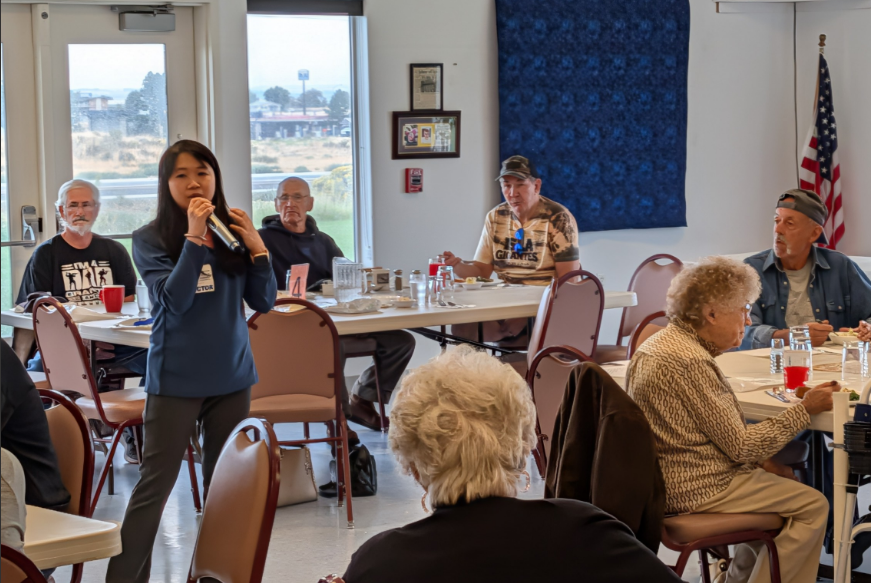
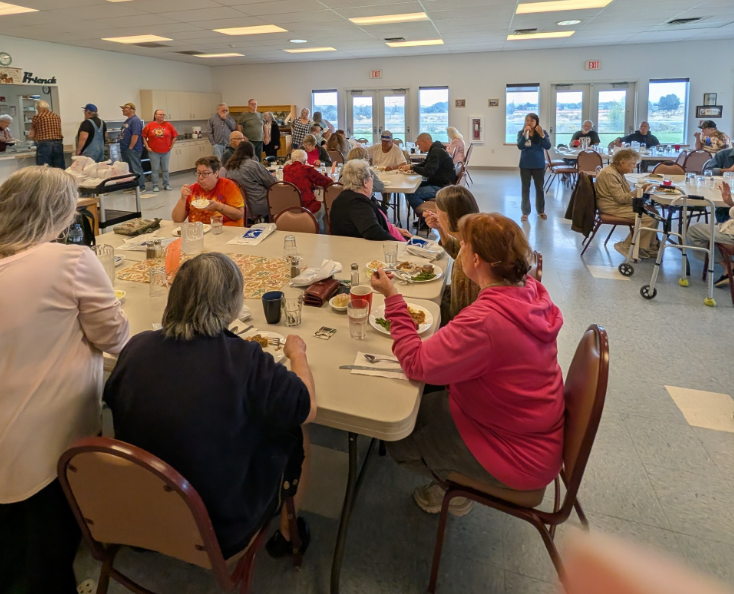
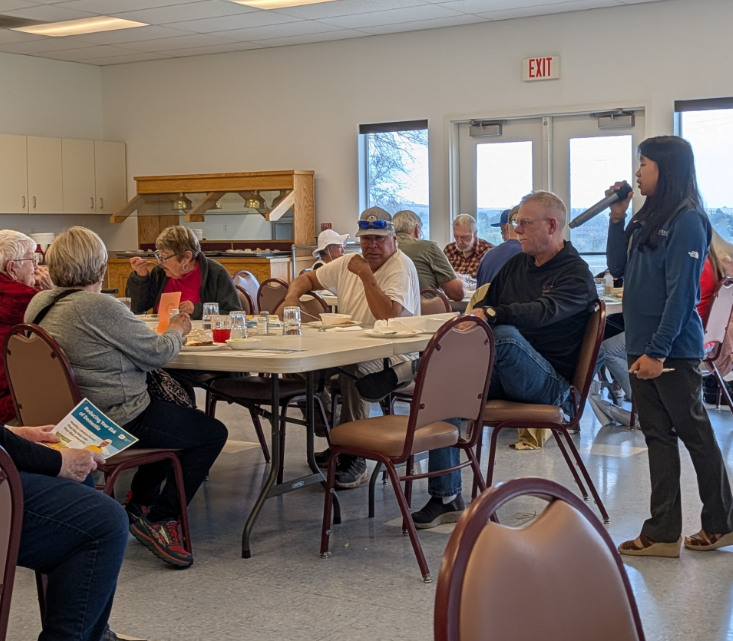
BOARDMAN, Ore.-Internist and Geriatrician Nu Nwe Tun, MD, with Good Shepherd Health Care System (GSHCS), gave a talk on Reducing the Risk of Dementia and Alzheimer’s at the Boardman Senior Center on September 17.
“I’m happy and honored to give this presentation and share information and knowledge to help the community,” said Dr. Tun.
Dr. Tun spoke to those in attendance for lunch at the Senior Center about the differences between dementia and Alzheimer’s, as well as how they are diagnosed, and steps that can be taken to help prevent their onset.
Dementia is an umbrella term that covers anything that interferes with someone’s ability to think or remember and that impacts their daily activities, according to Dr. Tun.
There are several forms of dementia, including vascular, Lewy Body, Frontotemporal, Parkinson’s, and Alzheimer’s, which is the most common form.
“It’s like a signal through a telephone wire not getting through,” Dr. Tun explained of the tangling of neurons that takes place in the brain as dementia or Alzheimer’s develops.
While there is no proven way to prevent dementia, Dr. Tun stressed the importance of modifying risk factors, such as high blood pressure and diabetes, as well as getting enough sleep and staying active to help lower the chances of developing dementia and Alzheimer’s.
Dr. Tun espouses a mind, body, and brain approach to staying healthy, with active breathing exercises for the mind, exercising and treating medical conditions, and getting enough sleep for the body, as well as reading and working to retain what you read for the brain.
“Your brain is a muscle, keep using it,” said Dr. Tun, of the importance of staying both physically and mentally active.
When diagnosing dementia, the more information that can be provided to a doctor by a patient’s family, including medical history and medications taken, is important. Geriatricians may also conduct cognitive tests or brain scans to help diagnose dementia.
According to Dr. Tun, there are also medicines that can slow down the development of dementia by helping the brain maintain signals longer.
Following her presentation, Dr. Tun fielded questions covering the hereditary risk of dementia, what to do if you live alone and think you might be getting dementia, caregiver options, and the importance of developing familiarity with your doctor.
Delores Davis served as a caregiver for her husband before he passed away from dementia/Alzheimer’s and attended lunch at the Senior Center.
“Sometimes the caregivers get the worst end,” said Davis, of Irrigon, who went to special classes with her husband’s doctor when he was diagnosed and she became his caregiver. “Unless you’ve gone through it, you just don’t know what it’s like. The hardest part is when they don’t remember you anymore. It can be frustrating at times, but I always try to put myself in the same position.”
A Board-Certified Internal Medicine Physician, Dr. Tun has been with Good Shepherd for six years and is the only fellowship-trained, certified Geriatrician in the region offering specialized care for seniors, including the treatment of simple and complex diseases.
“Dr. Tun is always a fantastic listener, to even the smallest details,” said Debbie Terry, of Irrigon, a patient of Dr. Tun’s. “She is very thorough and caring and will look something up if she doesn’t immediately know the answer. She treats the whole body, not just physical problems.
More information about Good Shepherd Internal Medicine is available online or by calling 541.667.3797.