









Understanding Data Centers is the first installment in a Northeast Oregon Now series examining the role of data centers in local communities and economies in Eastern Oregon from the perspective of the technology industry, City and County governments, and environmental advocates.
What are data centers?
Massive in size and scope, data centers somehow still remain in the background of our local Eastern Oregon landscapes. We can see them on the horizon or drive by them on the way to work without giving them much thought.
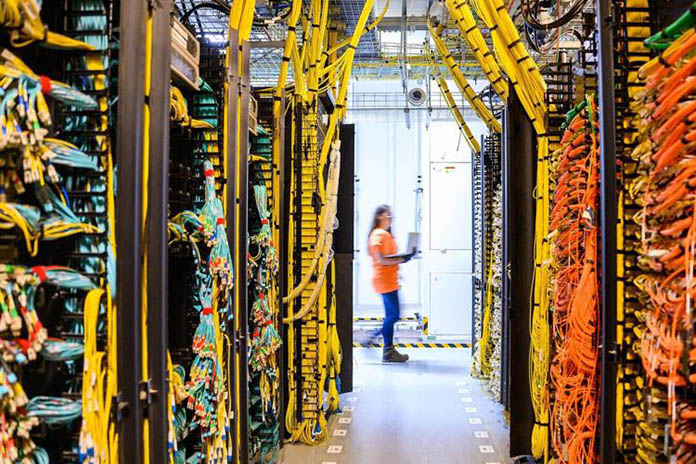
“The scale is very large, but people would be surprised how simple the operation really is,” said David Tanner, Director of Infrastructure Operations for Amazon. “Data centers are meshed collections of servers that process information and send it out to your device or computer.”
An essential component of modern life, when every click, stream, and online purchase depends on quick digital connections, data centers are essentially vast facilities full of servers that store, process, and disseminate digital information.
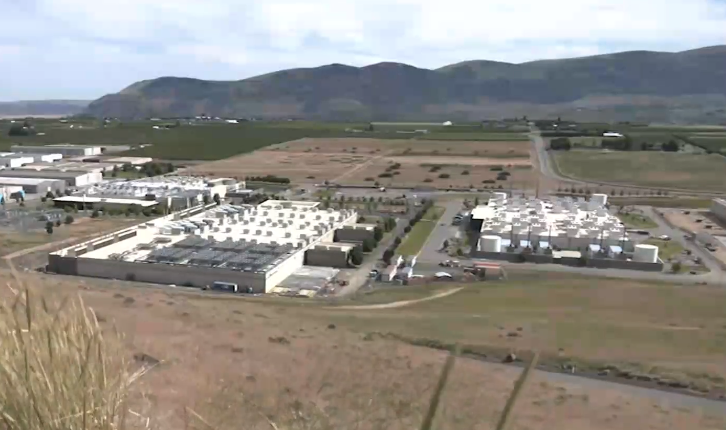
In regard to exactly what is stored in data centers? The short answer is, any and all data and information.
“Technology has evolved so quickly, becoming ingrained in our daily lives,” said Tanner. “Our life is now on the internet, and data centers are the physical manifestation of the internet.”
Data centers store information related to everything that’s online, and processing, computing, and accessing that information is all interconnected through data centers.
For Tanner, who has spent his entire 15-year career with Amazon in Eastern Oregon, it helps to start with the relatable in understanding what’s inside data centers and the information that comes out of them.
All the activities we do daily, from checking email, the weather or traffic on our phones, to placing a grocery order and streaming a football game, involve data centers.
According to Tanner, critical services that people might not necessarily think about, such as banking and healthcare, is also stored in data centers.
“It’s the entire internet and all of human knowledge is now available at our fingertips,” said Tanner.
Data Center location and economic benefit
Data centers have proliferated in Eastern Oregon over the past few years, however, choosing a suitable location goes beyond the availability of land and proximity to renewable power.
“Lots of factors go into choosing a location for a data center, including infrastructure, worker availability, and the engagement of local leaders,” said Tanner. “Many locations are considered before we move forward responsibly.”
Data centers are long term projects and Amazon has now been in Eastern Oregon for 15 years, contributing to the local economy and growing with the community.
According to Tanner, jobs connected to data centers go well beyond construction, with 2,500 people directly employed by Amazon in Eastern Oregon, and another 7,500 jobs indirectly supported.
Data center jobs include members of the operations team, infrastructure delivery, decommissioning team, the logistics team, data center engineering operations, and partner teams, including controls, field engineering, and project information.
Since 2011, AWS has invested $54.7 billion in Eastern Oregon and partnered with local cities and government on infrastructure projects benefiting local communities.
“We go where conditions make sense, where we can grow our presence, develop relationships and continue to invest,” said Tanner.
Part of that investment is giving back to the communities where AWS operates and its employees live, work and play.
Since 2020, AWS employees have volunteered over 10,000 hours in Eastern Oregon and supported local causes and community initiatives with funding and grants.
Environmental concerns
Possible environmental factors related to data centers, especially regarding the amount of water they use, have been a source of conversation both in Oregon and across the country recently.
According to Tanner, data centers in Eastern Oregon are air-cooled 92% of the year, only relying on water during the hottest parts of the year.
“Environmental factors, such as high heat and low humidity make air cooling efficient in Eastern Oregon,” said Tanner.
Over the past two years, AWS has actually decreased the amount of water used in its Eastern Oregon data centers, dropping from 284 million gallons in 2024 to 242 million in 2025.
AWS has also committed to water replenishment projects in Eastern Oregon, returning about 957 million gallons a year to local ecosystems, through partnerships with the Confederated Tribes of the Umatilla Indian Reservation (CTUIR), as well as the Hermiston Aquifer project, and others.
The amount of power used by data centers has also been an issue of contention recently, with some opponents saying the power required to run data centers could lead to periodic blackouts in the future.
Power usage effectiveness (PUE) is a standard industry metric that measures the ratio of total power consumption for data centers, with an ideal PUE as close to 1 as possible.
According to Tanner, AWS data centers have a PUE of about 1.12, well below the industry average of 1.25.
In Eastern Oregon, AWS partners with Umatilla Electric Cooperative (UEC) to power its data centers.
“We self-supply by funding our own substation through UEC and bearing a larger share of the cost,” said Tanner, in explaining that the partnership does not affect the rates of UEC members, which are among the lowest in Oregon.
Data centers a part of life
Technology has advanced so rapidly in the 21st century that we often take it for granted. The next time you drive past a data center, order lunch or look something up on your phone, though, try and remember the role of data centers in keeping our modern, digital lives connected.
The data centers dotting the Eastern Oregon landscape are here to stay, playing a crucial role in the storage and management of information, impacting local economies, and providing valuable opportunities for community partnerships.
“We take the long view, we want to be a strong, lasting partner and a good neighbor, we live and work here, too,” said Tanner.