








HERMISTON, Ore.-Good Shepherd Health Care System (GSHCS) was the first health care system in Oregon to acquire the HistoSonics Edison® Robotic System to treat liver tumors with histotripsy, a revolutionary treatment that uses ultrasound energy to target and destroy liver tumors.
World-renowned Board-Certified Interventional Radiologist Dr. Kevin Burns performed the first histotripsy in Oregon at GSHCS in October 2025.
Now patients from across the country and around the world are coming to GSHCS in Hermiston for the non-invasive treatment option for liver tumors.
Jonathan Cermin, of Dresser, Wisconsin, worked as a videographer for 34-years, until cancer forced him to retire about a year ago.
Cermin heard about histotripsy through word-of-mouth after some relatives just happened to meet the Marketing Director for HistoSonics® around a campfire at a music festival.
Cermin has now undergone four histotripsy procedures, the past two performed by Dr. Burns at GSHCS.
“It was amazing,” said Cermin, after his most recent histotripsy. “I never felt that good after any real surgery, and I was totally drug-free the next day. I’m very pleased and grateful for the technology, and grateful for Dr. Burns.”
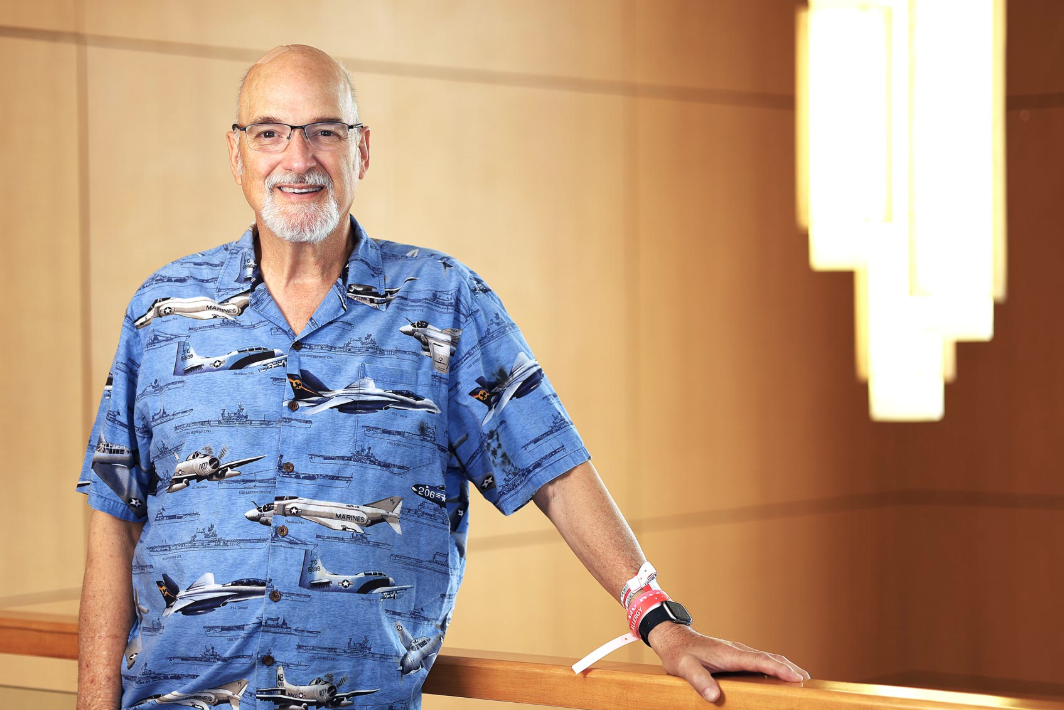
Dr. Burns targeted tumors on Cermin’s liver during his recent histotripsy at GSHCS, and after his kidney and pancreas were targeted during treatments at different hospitals, Cermin is now the first patient ever to have all three organs treated with histotripsy, according to a HistoSonics® spokesperson.
“One cool thing about Dr. Burns is that he was able to get everything, and I’m clean now,” said Cermin. “To hear that all my tumors have been taken care of is a blessing.”
Histotripsy is currently approved for use on liver tumors. The results of the procedure on Cermin’s kidney and pancreas will be added to the clinical trial data as HistoSonics® works toward Food and Drug Administration (FDA) approval for use on organs other than the liver.
According to a HistoSonics®, Inc spokesperson, a request to expand the use of histotripsy to the kidneys has been submitted to the FDA, with a decision on approval expected later this year or early 2027.
The approval timeline for the use of histotripsy on the pancreas is expected to be about the same.
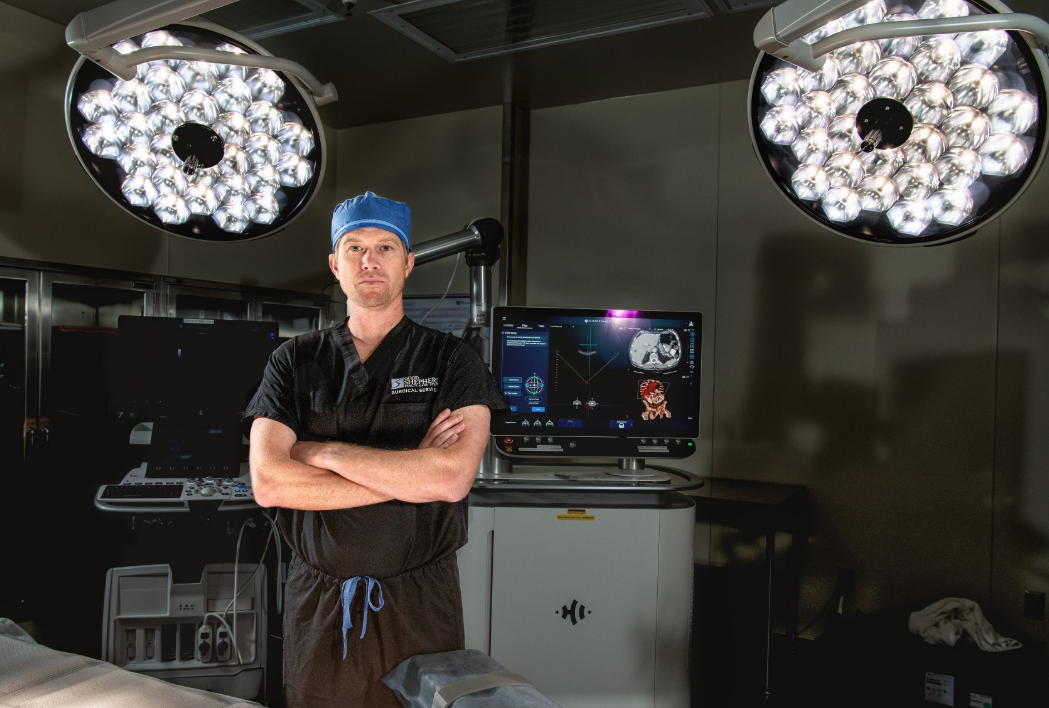
HistoSonics Edison™ Robotic System
Histotripsy is a non-invasive, targeted procedure that uses high-intensity ultrasound waves to destroy tumors on a patient’s liver.
“HistoSonics is a very safe technology, there’s no cutting, no tool ever touches the body,” said Cermin. “It’s all done with ultrasound beams that cross and destroy the tumor.”
Unlike traditional surgery or treatment options, histotripsy does not require cuts or incisions and can be done under general anesthesia, using ultrasound imaging to locate the targeted tissue and monitor the treatment in real-time.
Histotripsy precisely targets tumors, minimizing damage to surrounding tissue. Although individual results vary based on a patient’s condition and treatment plan, most tumors can be destroyed in as few as one histotripsy treatment session.
“People are coming from all over, even overseas for this and it’s not a prolonged deal,” said Cermin. “You walk out and can carry on your life.”
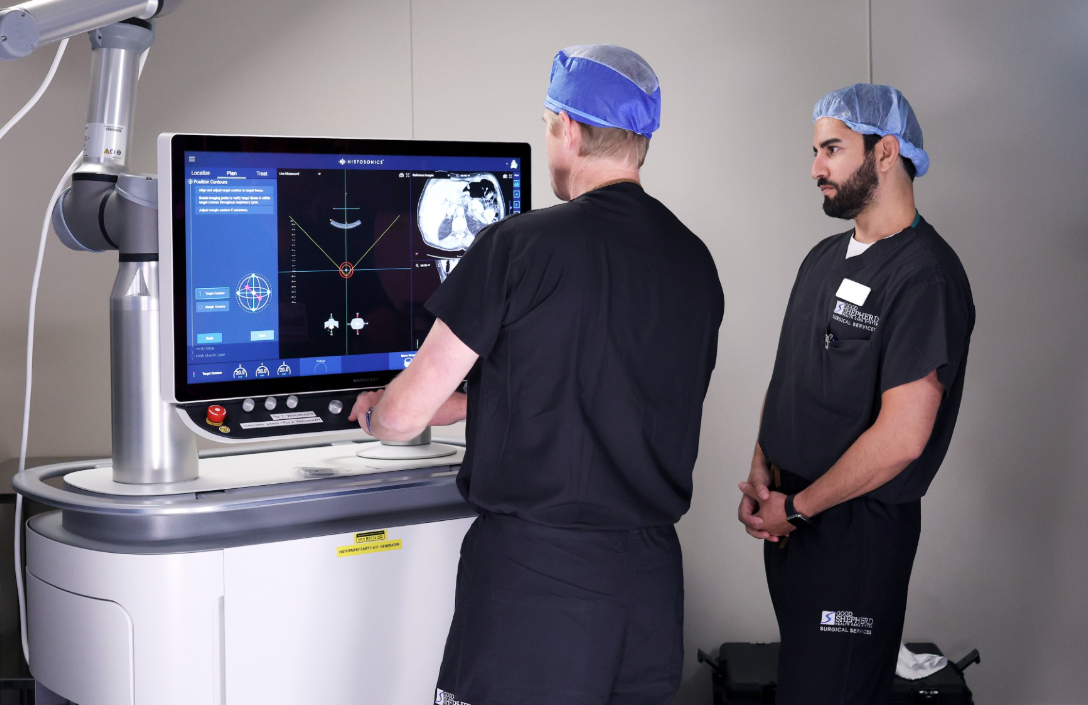
During a histotripsy procedure, a treatment head, which emits the ultrasound waves, is placed inside a soft, flexible membrane containing specially treated water, which is then positioned on the patient’s abdomen and pointed at a tumor on the liver.
The ultrasound waves create a bubble cloud from the rapid expansion and collapse of naturally-occurring gas bubbles within a patient’s tissue, which then destroys the targeted tissue.
“I can tell you the future is in robotics,” said Cermin. “They don’t screw up, they’re not sleep deprived and when they learn something, they know it. It’s a more complete surgery, operated by highly-trained robotic surgeons.”
A new lease on life
Histotripsy has been studied in laboratories for over two decades now, with clinical trials starting in 2018.
While the procedure is not a cure for cancer, clinical trials have shown its effectiveness in treating patients with liver tumors.
“Histotripsy neutralizes tumors and prevents them from spreading,” said Cermin. “It’s not a cure, but it does speed up getting rid of cancer.”
For Cermin, histotripsy buys him time, as the promising new cancer drug, Daraxonrasib works its way to the market.
Developed by Revolution Medicines, Daraxonrasib gained national attention when former Nebraska Senator Ben Sasse enrolled in clinical trials for the drug after being diagnosed with Stage 4 Pancreatic Cancer in December 2025.
Since enrolling in the clinical trial, Sasse’s tumors have shrunk a reported 76 percent.
Revolution Medicines received a standing ovation at the 2026 American Society of Clinical Oncology (ASCO) Annual Meeting, held May 29-June 2 in Chicago, when phase 3 trial data that showed a nearly doubled rate of survival in previously-treated metastatic pancreatic cancer was presented.
“Oncologists have high aspirations for it, and the Food and Drug Administration is trying to fast-track it to the market,” said Cermin, who is on five lists for Daraxonrasib when it becomes available.
While Daraxonrasib has not yet been approved for use, it has been selected for the FDA Commissioner’s National Priority Voucher program, which accelerates the development of therapies aligned with national health priorities.
If Revolution Medicines submits a new drug application and the FDA grants the drug priority review, Daraxonrasib could theoretically hit the market by the spring of 2027.
The Good Shepherd Experience
Cermin, who filmed many medical videos throughout his career, is impressed with the HistoSonics Edison® Robotic System, and the level of care he received at Good Shepherd Health Care System.
“I’d never heard of Hermiston before, yet they have a computer that will fix my tumors,” said Cermin. “How in the world can they do this and bring in Dr. Burns, a world-renowned Interventional Radiologist.”
Cermin and his wife Cheryl flew into Pasco, WA, from Minneapolis and got to Hermiston a day early for pre-op, followed by the histotripsy, then an MRI, and had the opportunity to fly home the day after the procedure.
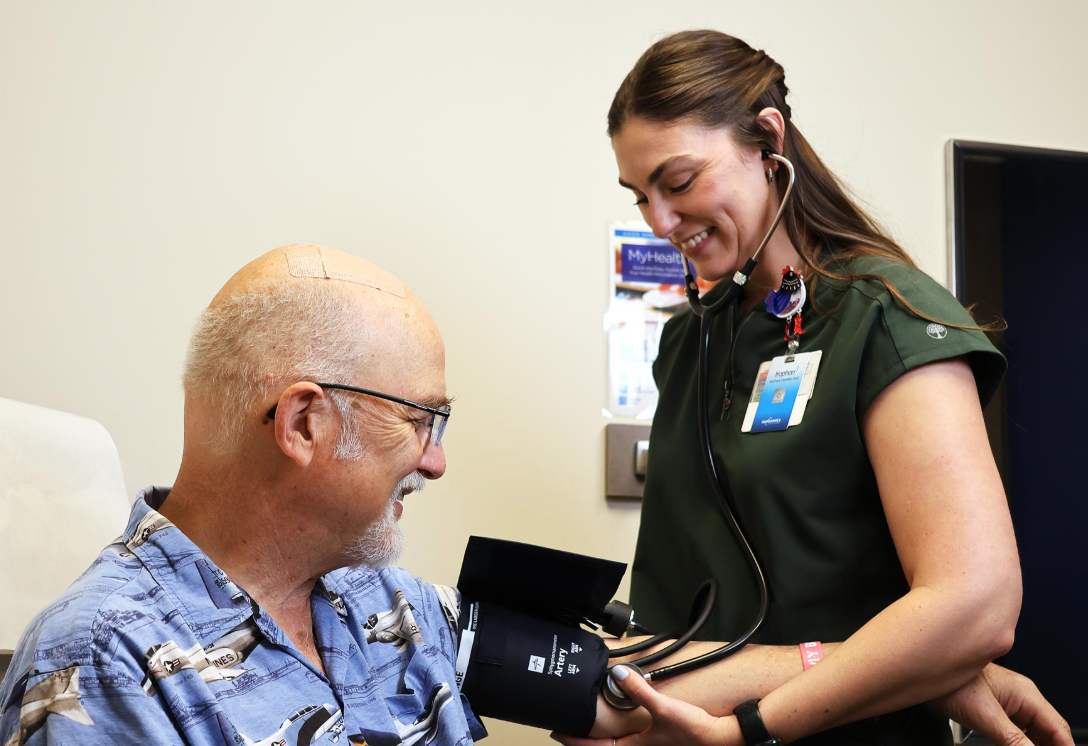
“Check-in was flawless, and we appreciated the in-person handoff,” Cermin said of his experience at Good Shepherd. “It was really impressive and important to me that all the staff introduced themselves, told me their role, and used my name. It’s like a friend, you feel warm all over.”
Cermin has now had four histotripsy procedures and knows that personal touch combined with high-quality care is not present in every health care system.
“You’re not just a name or number here,” said Cermin. “I love that you can call and get your questions answered because with some hospital systems you can’t talk to an actual person. Here, Nikkie [RN, Urology Clinic Nursing Supervisor and HistoSonics® Coordinator] picks up the phone or calls back in 20 minutes-it’s been a wonderful experience.”
Good Shepherd Interventional Radiology, located at 620 NW 11th Street, Suite M-013 in Hermiston, offers advanced, minimally invasive procedures to diagnose and treat patients.
To learn more about histotripsy and whether it may be right for you, contact Good Shepherd Interventional Radiology at 541.667.3863. Appointments may also be made online.