










Understanding Data Centers is a Northeast Oregon Now series examining the role of data centers in local communities and economies in Eastern Oregon from the perspective of the technology industry, City and County governments, and environmental advocates.
HERMISTON, Ore.-Eastern Oregon is home to more than 50 data centers, including two within the Hermiston City limits.
This edition of “Understanding Data Centers” looks at the economic impact and jobs created, as well as the infrastructure and community development data centers have funded in Hermiston.
Data centers in Hermiston
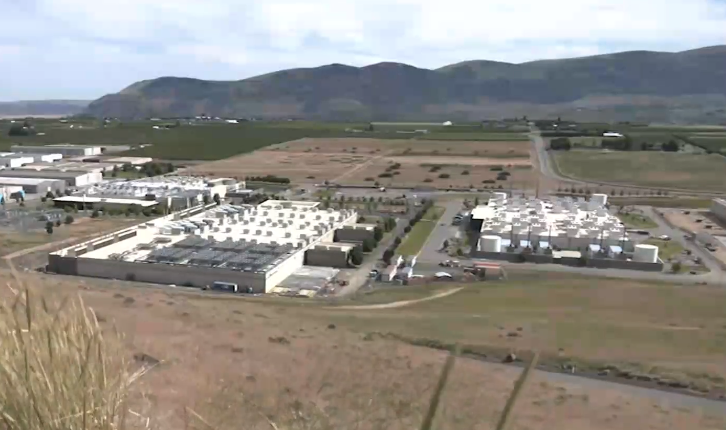
Hermiston is currently home to two data centers operated by Amazon Web Services (AWS).
In addition to the availability of land and the proximity to renewable power, other factors, such as worker availability and the engagement of local leaders goes into deciding on a suitable location for a data center.
“As far as I know, Hermiston has never specifically solicited data centers,” said Assistant City Manager Mark Morgan. “They have come to us and said, ‘we’d like to be here.’”
The location of data centers within city limits depends on the zoning of specific properties, such as light or heavy industrial.
If data centers are an allowable use in the zone that their operators hope to build in, then the City works with them on zoning, developing a site plan, including figuring out utilities and street connections, before approval, and, ultimately, construction.
Economic benefits of Hermiston’s data centers
One of the common misconceptions about data centers is that they don’t employ a great number of people, that they are just big buildings full of computers doing most of the work.
“In general, the number of jobs associated with data centers are significantly larger than what people think,” said Morgan.
About 2,500 people are directly employed by Amazon in Eastern Oregon, with another 7,500 jobs indirectly supported, according to David Tanner, Director of Infrastructure Operations for Amazon.
Each of the two data centers in Hermiston has about 200 full-time employees in operational jobs on campus, as well as third-party employees, such as security workers.
The number of jobs associated with data centers in Hermiston is determined by multiple sources, including Placer AI software used over a few years to garner specific and accurate information, as well as data center economic impact reports.
“Data centers thread the needle nicely for a community of Hermiston’s size,” said Morgan. “With one or two campuses a year employing about 200 people, we can maintain economic growth without overwhelming the community.”
About every ten years, the City of Hermiston conducts community outreach regarding the wants, needs, and expectations of residents.
Reports dating back to the 1990’s and 2000’s emphasize economic development, however, beginning in the 2010’s reports indicate a desire for economic growth, while maintaining Hermiston’s small-town feel.
In 2020-2021 Hermiston asked residents what they valued most and would like to see in the next two decades with its Hermiston 2040 Vision.
The majority of responses indicated that residents valued a growing economy first, followed by Hermiston’s small-town feel.
According to Morgan, the addition of data centers to the Hermiston economy allows the City to grow economically, while maintaining the feel of the community in a way that the addition of other industries that might bring thousands of jobs all at once can’t.
Enterprise zone payments and franchise fees
The two main revenue sources that the City receives from data centers operating within city limits are payments in lieu of property taxes for operating within an enterprise zone, and franchise fees for electricity, according to Morgan.
Administered at the local level through the State of Oregon to foster economic development and create jobs, enterprise zones are designated areas in which businesses can receive temporary property tax exemptions on capital investments.
“The long-term rural enterprise zone (LTREZ) property tax abasement fully exempts large scale projects up to $250 million from property taxes,” said Morgan. “It’s an agreement for an annual payment in lieu of property taxes.”
When a certificate of occupancy is approved for a business inside the Hermiston enterprise zone, a 15-year payment plan begins in lieu of property taxes.
The first data center in Hermiston broke ground in 2023 and was granted a Certificate of Occupancy in July 2024.
The second broke ground in 2024, however, no Certificate of Occupancy was issued before the end of calendar year 2025.
According to Morgan, under the LTREZ, terms of AWS’ annual payments come out to about $4.5 million a year per campus for 15 years.
Data centers operating in Hermiston also pay franchise fees, which are a percentage of electricity usage.
In December 2025, City Council approved an adjustment to Hermiston’s electricity rate, lowering it from 7% to 4% for all customers, including data centers.
According to the City, an increase in franchise fees from data center operations within Hermiston made the rate reduction possible.
“Based on usage, we anticipate about one to two million a year in electricity franchise fees from data centers,” said Morgan.
Data centers contribute to Hermiston community
Enterprise zone funds from Amazon have been used by the City of Hermiston to help finance capital projects without raising taxes for residents, including City Hall, the library renovation, and renovation of the Public Safety Center.
Hermiston’s rebuilt City Hall at 180 N.E. 2nd Street was partly financed with enterprise zone funds and created a modern facility that brought multiple departments into the same building.
“With the City Hall facility we were able to consolidate functions, such as having the building and planning departments in the same building,” said Morgan. “Bringing Municipal Court and its staff to City Hall also gave us the room to renovate and expand the PSC.”
The Hermiston Public Library renovation project included safety and accessibility improvements, the addition of study rooms and maker spaces, dedicated teen and children’s areas, and more natural light.
Funded through enterprise zone funds from Amazon and Lamb Weston projects, the renovated Hermiston Library reopened in October 2025.
Renovations to Hermiston’s Public Safety Center (PSC) at 330 S. First Street, that houses both the Hermiston Police Department and Umatilla County Fire District #1, were also funded in part by enterprise zone funds from Amazon.
The Safety Center construction project included incorporating the former Municipal Court space into evidence storage, expanding space for UCFD#1, increasing functional workspaces throughout the building, adding an elevator, and constructing a sallyport and training room.
The renovated PSC opened in Spring 2026.
Water usage in the Hermiston area
Possible environmental factors related to data centers, especially regarding the amount of water they use, have been a source of conversation both in Oregon and across the country recently.
“Data center water consumption is drastically lower than people think, at least here in Hermiston,” said Morgan.
While data centers do need water for cooling purposes, water usage varies with different types of data centers in different locations across the country.
The high heat and low humidity in Eastern Oregon make air cooling a feasible option for most of the year.
According to Tanner, AWS data centers in Eastern Oregon are air-cooled 92% of the year, only relying on water during the hottest parts of the year.
In Hermiston, a hyperscale data center campus uses 22 million gallons of water in the area.
“The City is the water utility, so we know exactly how much water data centers use,” said Morgan.
A breakdown of how much water is used by homes, businesses, and data centers in the Hermiston area is available online on the Public Works Water Use in the Hermiston Area page on the City website.
The average residential water customer in Hermiston uses about 170,000 gallons of water a year, with the vast majority of that used outside on lawns and landscaping.
“One data center campus ends up using the same amount of water as about 129 homes,” said Morgan. “Which, if we assume about 2.5 people per home comes out to about 500 people.”
Data centers in Hermiston may use less water than other sites in the country, however, water demand across all customers is still highest during the summer, especially in July and August.
To help address the demand for water needed for irrigation and cooling data centers during the summer, Amazon also funded the Aquifer Storage and Recovery Project in the South Hermiston Industrial Park.
The project involves pumping water from the Columbia River during winter months and storing it underground for use by Hermiston residents during peak water demand months, while allowing AWS access to some of the stored water to cool its data centers.
More data centers in Hermiston’s future
Last fall, Hermiston annexed an additional 800 acres of land in the South Hermiston Industrial Park zoned for future data center usage into its Urban Growth Boundary (UGB).
The annexation increased Hermiston’s UGB by about 20% and was zoned to accommodate future data center growth, although there’s currently no timeline for when the sites will be developed, according to Morgan.
“We think having data centers in the region is a base for strong, steady economic growth that fits our area well,” said Morgan.