









SALEM, Ore.-The Oregon Health Authority (OHA) launched a new measles wastewater surveillance dashboard to strengthen early detection across the state on February 19.
OHA’s measles wastewater surveillance dashboard shows viral concentrations by county and categorizes activity as very low, low, moderate or high over two-week periods.
“Wastewater surveillance serves as an early warning signal system, which gives communities a head start to prepare and empowers everyone to make informed decisions about immunization,” said Howard Chiou, M.D., PhD., Medical Director for communicable diseases and immunizations at OHA’s Public Health Division. “Wastewater testing looks for the actual measles virus that causes illness in people, so it provides an early signal of community spread.”
Measles is a highly contagious respiratory virus spread through the air when an infected person breathes, speaks, coughs or sneezes. Symptoms include cough, runny nose and conjunctivitis with high fever, followed by a rash that starts on the head or neck and spreads downward.
Measles cases have been on the rise since early 2025, with almost 2,300 cases reported last year, mostly among unvaccinated children, according to the Centers for Disease Control and Prevention (CDC).
Wastewater monitoring, used in conjunction with traditional case reporting began in October of 2025, with Oregon submitting data to the CDC’s National Wastewater Surveillance System, which uses a high threshold for labeling samples as a “detection.”
For the two-week period ending Feb. 7, both Morrow and Umatilla Counties show “very low” measles virus concentration levels, according to the surveillance dashboard.
There have been five confirmed measles cases in Oregon since the start of the year, with those cases reported in Linn and Clackamas Counties, a number that likely represents only a portion of infections statewide, according to the OHA.
“Measles is here in Oregon and spreading in the United States,” said Dr. Chiou. “Vaccination remains the best way for people to protect themselves. We encourage everyone to talk with a healthcare provider to ensure they and their families are fully protected.”
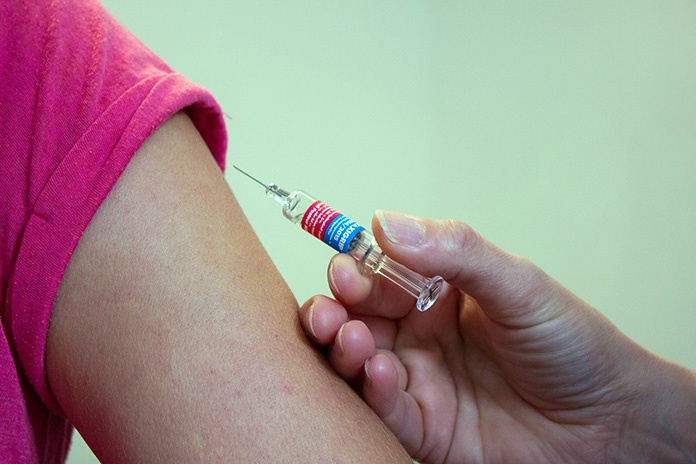
The CDC recommends that children receive two doses of the Measles, mumps, and rubella (MMR) vaccine, which is 97 percent effective at preventing the virus.
Anyone not vaccinated against measles is at risk, and with the launch of the measles wastewater surveillance dashboard, the OHA is advising everyone to check their vaccination status and speak with a healthcare provider if they have questions.
MMR vaccines are available at both the Pendleton and Hermiston Umatilla County Health Department Offices.