







HERMISTON, Ore.-Longtime Good Shepherd Health Care System (GSHCS) employee Kyle Furukawa is retiring and was recently honored for her decades of service.
“Thank you for being here, it means a lot,” said Furukawa at her retirement ceremony. “I’m grateful for the teamwork and support.”
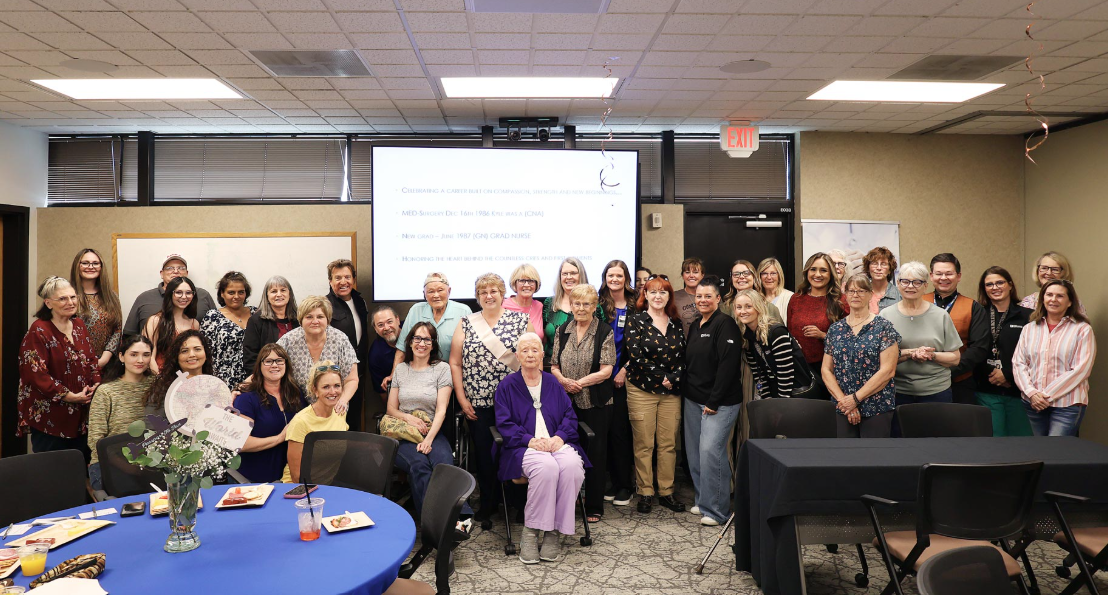
Songs were sung, tales of travel and stories of work were told, laughs were had, and even a few tears were shed at the celebration attended by Kyle’s husband, Harvey, and stepson Conner, as well as friends, co-workers, and former colleagues.
A career in health care
Furukawa began her career at the original Good Shepherd Community Hospital on Orchard Avenue while still a teenager.
“I had an aunt that was a nurse, and honestly, I liked the little white uniform,” Furukawa said with a laugh recently, as she recalled her entry into nursing at nineteen-years-old. “I always liked to help people and try to make a difference.”
After two years of working in the surgery, medical and birth wings of the old hospital, Furukawa left to attend Blue Mountain Community College, where she earned her nursing degree, before rejoining Good Shepherd.
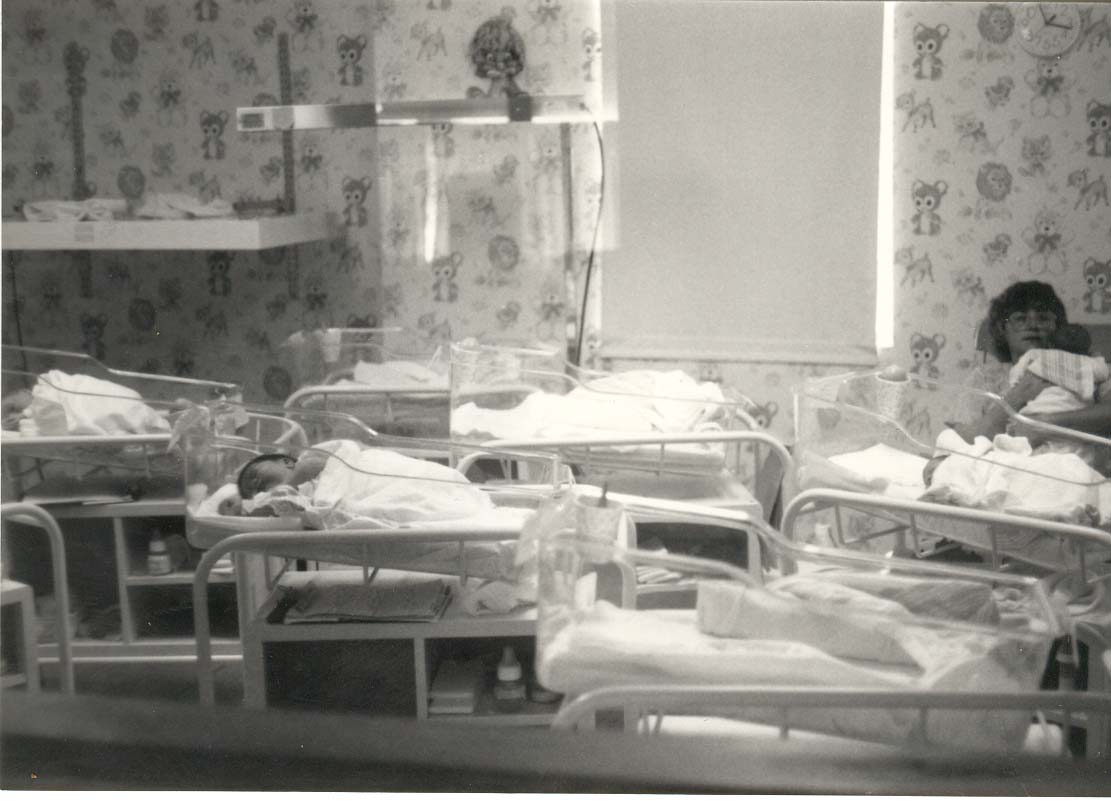
Over the next 39 years, Furukawa served in a variety of positions at GSHCS, including as a Nurses Aid, CNA, Medical/Surgical Nurse, and as Manager of the Family Birth Center, where she spent the majority of her career.
Furukawa also worked in Administration as the Interim Vice President of Nursing, a role which she found did not suit her, and has worked in IT Clinical Informatics for the past 17 months.
IT Clinical Informatics uses information technology and data management to improve patient care, clinical decision-making, and healthcare delivery, a role that utilizes Furukawa’s background in nursing with integrating computers and technology.
Changes to medical technology and health care
Furukawa’s career coincided with the evolution of societal norms, the development of medical technology, and the advancement of health care.
“Medicine in general has advanced,” said Furukawa. “The growth of specialties and providers and the modernization of equipment and practices have been a big change.”
Furukawa can still recall emptying the ashtrays in patient’s rooms early in her career, sterilizing her own equipment, and the formality that existed between doctors and nurses, with doctors always referred to by their last name and nurses deferring to doctors.
The amount of time patients stay in the hospital is also something that Furukawa has seen decline throughout her career, aided by technology.
“Hospital stays have also changed, women used to stay in the hospital for five days after giving birth, now they are barely here a day,” said Furukawa. “Surgery used to be a 5-7 day stay, now they can go home the same day.”
According to Furukawa, the level of care patients receive, and how families or loved ones of patients are included in that care, is another significant change.
“Before family members or loved ones were allowed minimal visits and were not told much about what was going on,” said Furukawa. “Now we work to integrate family into the patient’s illness or treatment by teaching them about what’s going on and providing them the knowledge to help their loved one through.”
Mentors, colleagues, co-workers and friends
Several dedicated nurses and co-workers meaningfully impacted Furukawa’s life and career, but two that quickly come to mind are Kathie Mallory and Ruth Konningrud.
“The expectation to always do a good job from Ruth and the leadership skills from Kathie,” said Furukawa.
Mallory, the former Vice President of Nursing at GSHCS, who’s now retired, attended Furukawa’s retirement celebration and spoke at the occasion.
“I remember when Kyle was a young, innocent nurse,” said Mallory. “We needed an OB Manager, and I talked her into it and mentored her. She took it on and was marvelous. She’s a marvelous friend, nurse, mother, wife and friend of the community for the hospital.”
Furukawa also had the opportunity to mentor younger nurses throughout her career, including seeing a former patient become a nurse and watching CNA’s that worked for her become nurses, some of them at Good Shepherd.
“Do a good job, treat people the way you want to be treated,” said Furukawa, when asked for advice for the next generation of health care workers. “Always remember who you’re caring for is somebody’s child, brother, sister, mother or father.”
A well-deserved retirement
Kyle and Harvey have been married since 1984 and have two children and two grandchildren, and Furukawa plans to spend more time with them and travel even more in retirement.
“I’m going to miss belonging to this organization and the camaraderie with other nurses and my co-workers,” said Furukawa. “I love my patients and this organization, but I won’t miss the demands of my time belonging to someone else every day.”
Furukawa has long been a world traveler, having visited six of seven continents, including Antarctica, and the couple will soon embark on a trip to see the grandkids and go to Disneyland.
“People always say, ‘what are you going to do now, aren’t you going to get bored in retirement?’ but we’re going to have more fun and travel even more,” said Harvey Furukawa.